CBSE Just Made AI Compulsory in Grades 6 - 8. Here's What Teaching It Actually Looks Like.
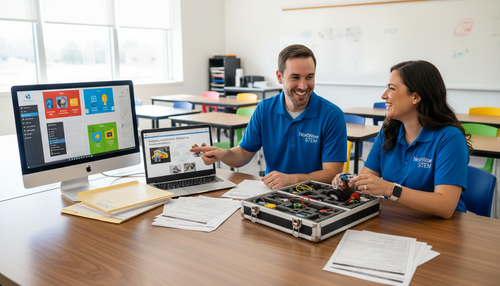
Somewhere in India this term, a computer teacher is looking at a new line in their timetable: Introductory AI, 20 hours, Grade 6. There’s a CBSE handbook sitting on their desk. There isn’t much else.
That’s not a criticism of the teacher, or of CBSE. It’s just where things stand right now, for a very large number of schools, all at once.
What actually changed
On 1 April 2026, CBSE launched a new Computational Thinking and Artificial Intelligence curriculum for Classes 3 to 8, developed by an expert committee at IIT Madras and aligned with NEP 2020. For Classes 6, 7, and 8, that means 100 hours a year split across three parts: 40 hours of Advanced Computational Thinking, 40 hours of interdisciplinary projects, and the part this article is about, 20 hours of Introductory AI per grade, per year, delivered by the school’s own computer teacher.
There’s no separate exam for it. Students are assessed through projects, assignments, and reflective work instead. But the hours themselves aren’t optional, and the 2026–27 academic session, the one this applies to, is already underway. CBSE has more than 24,000 affiliated schools in India, all under the same requirement, on the same timeline.
The part the mandate doesn't solve
A curriculum mandate tells a school what to cover. It doesn’t tell a teacher how to run 20 hours of hands-on AI classes with a group of 11-to-14-year-olds who’ve never trained a model or built a chatbot before.
Right now, two things exist to help. CBSE’s own facilitator handbooks are genuinely well put together and clear, chapter-by-chapter guides to what each grade should learn. But they’re reading material. There’s nothing in them for a student to actually do, and no way for a school to show, later, that the hours were delivered.
The other option is a handful of publisher AI textbooks, priced similarly to what a full programme costs, but built the same way most Indian school textbooks are: theory first, print first, exercises at the end of the chapter. For a subject that’s fundamentally about building things — a chatbot, a model, a simple flight path for a drone — neither option gets a student’s hands on a keyboard.
What's launching, and why it's built the way it is
This is the gap NextWaveSTEM’s Introductory AI was built to close, and it’s now available in India through India Market Entry (IME).
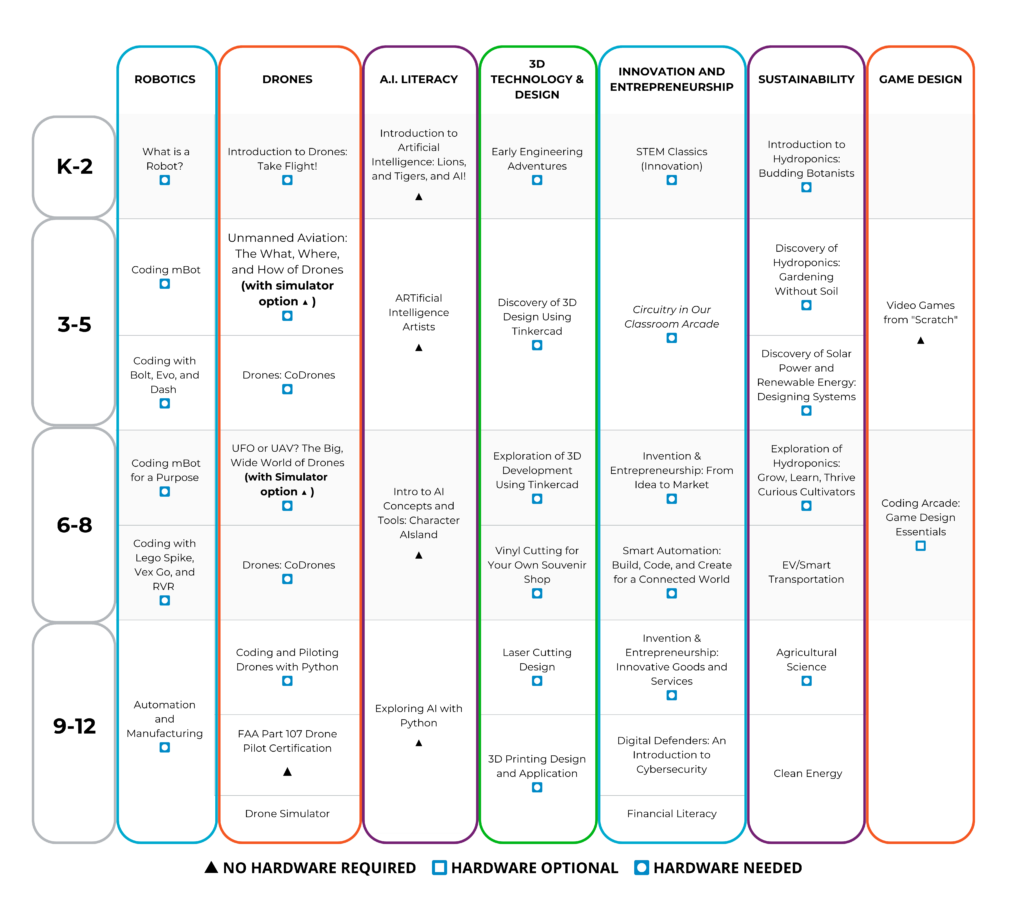
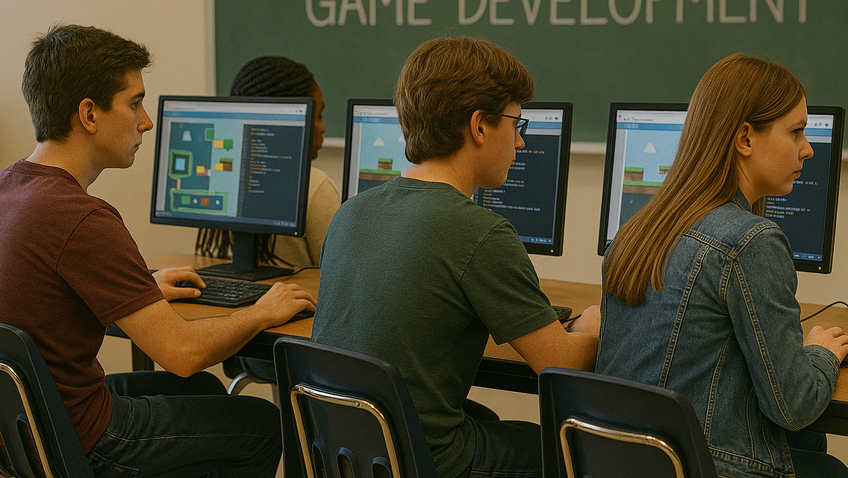
The programme doesn’t start from a blank page. It’s assembled from four existing NextWaveSTEM courses — ARTificial Intelligence Artists, Character AIsland, Drone Simulator, and Coding Arcade — with every lesson re-sequenced into CBSE’s own handbook order, chapter by chapter, at the grade CBSE teaches it.
That last part matters more than it might sound: it means a teacher already following the CBSE handbook isn’t learning a second, parallel system. The platform lesson for this week is the handbook chapter for this week.
What a lesson actually looks like
It’s easier to describe this with an example than a features list.
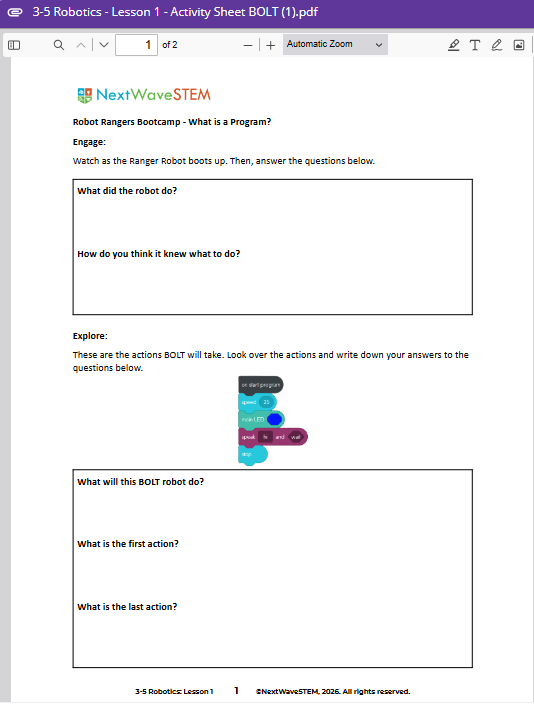
A Grade 6 class might open with “Creating with Technology” — a short, low-stakes introduction to what AI is and isn’t. A few sessions later, students hit “Predictive Drawing,” where they sketch against Google’s QuickDraw and watch an AI try to guess what they’ve drawn, mid-stroke — a genuinely fun way into the idea of pattern recognition, which happens to be exactly what that week’s handbook chapter covers. By the seventh or eighth session, they’re in “DeepFakes,” looking at manipulated images and talking through what makes them convincing, and why that matters.
Move up to Grade 7, and the work gets more technical: building a text-recognising chatbot in Scratch, training a facial-recognition model and discussing where bias creeps into training data, or coding a virtual drone delivery for “Disaster Master,” which doubles as a way into how AI gets used in real emergency response.
By Grade 8, students are working through the full arc of an AI project — define the problem, collect and prepare data, train a model, evaluate it, and reflect on whether it’s fair — culminating in a capstone project called “Virtual You,” where each student builds and trains a chatbot version of themselves.
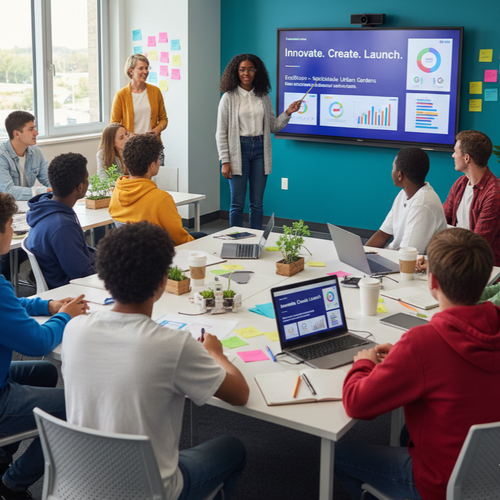
None of it requires a lab, a robot, or specialised equipment. It runs in a browser, in the computer room the school already has, in the one weekly period already set aside for it.
The practical side
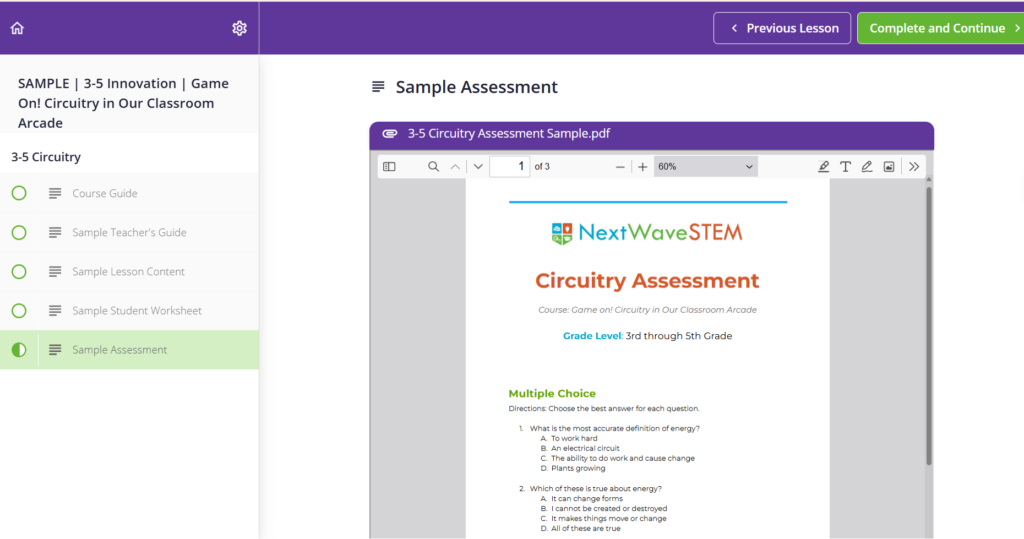
Each school gets platform access for teachers and students, lesson plans and slides for every session, assessments with answer keys, and a document mapping every single lesson to its CBSE handbook chapter — so a teacher (or a principal being asked hard questions by a parent) can see exactly where the mandated hours are coming from. A live one-hour onboarding session gets the teacher started, and support continues from there.
Why the timing matters beyond any one classroom
India has more than 250 million school-going children — the largest student population anywhere in the world — and its edtech sector is growing quickly around them: roughly a US$7.5 billion market today, on a trajectory toward US$29–30 billion by 2030–31, according to IBEF.
What’s unusual here isn’t the market size. It’s the shape of the demand. A national curriculum mandate, backed by policy and already in force across a defined set of 24,000+ schools, has created a specific, dated compliance requirement — the kind of clean, structured entry point that overseas education providers evaluating India rarely get handed. Most edtech adoption in India happens gradually, school by school, on nobody’s particular deadline. This one has a deadline already, whether or not any given school has a plan for it yet.
Who's behind it
NextWaveSTEM is a US-based provider of K-12 STEM and Career and Technical Education programmes, founded in 2017 and based in Chicago. It’s spent years building hands-on curriculum in robotics, drones, and AI for schools across the US — Introductory AI isn’t new content written for this mandate; it’s existing, tested material, restructured to fit it.
India Market Entry (IME) is NextWaveSTEM’s Official India Partner for the launch, handling school and partner engagement, demo access, teacher onboarding, and ongoing support on the ground. For a global provider, that local layer is usually the difference between a curriculum that’s technically available in India and one a school can actually adopt this term.
Join Our Newsletter
Subscribe to our newsletter for the latest trends, insights, and updates on global education and market opportunities with IME!

India Market Entry (IME) is a boutique consulting firm specialising in assisting global education stakeholders to navigate India’s vibrant education sector. IME’s core competency is strategic business development.
Quick links
Let's Get in Touch!
© 2024 India Market Entry. All rights reserved.
Trakru Global Services Private Limited that owns www.indiamarketentry.com, is a company incorporated under the laws of India, having its office at 588, Sector 14, Faridabad, Delhi NCR, Haryana, 121007, having CIN number U93000HR2020PTC087647