Assessing the Skills AI Can't Replace

Macat launches in India
India Market Entry (IME) today confirms its role as the official India partner for Macat, a UK-based critical thinking and creativity assessment organisation, marking the company’s formal entry into Indian schools, universities, and corporate hiring pipelines.
It is a launch built on a simple, well-evidenced premise: the skills employers and institutions now say matter most are exactly the ones most existing assessment in India doesn’t measure.
The gap, in numbers
This isn’t an abstract concern. It’s measurable, and it’s accelerating.
According to the World Economic Forum’s Future of Jobs Report 2025, employers expect 39% of workers’ core skills to transform or become outdated between 2025 and 2030. Against that backdrop, one skill has held its position at the very top of what employers say they need: analytical thinking, which 7 in 10 companies now rate as an essential core skill; more sought-after than any technical or digital competency in the report.
India’s own education numbers tell a parallel story of scale and urgency. The country’s education market is projected to grow from US$117 billion in FY23 to US$313 billion by FY30 (India Brand Equity Foundation). Higher education enrolment alone reached 4.33 crore (43.3 million) students in 2021–22, up 26.5% from 2014–15, as the sector pushes toward the National Education Policy 2020’s target of 100% Gross Enrolment Ratio by 2030. The K-12 segment spans roughly 260 million students across 1.5 million schools, and is itself valued at over US$100 billion.
Scale like that is exactly why NEP 2020 didn’t stop at curriculum reform, it opened India’s doors to foreign providers directly. In 2024, the University of Southampton became the first foreign university to open a full offshore campus in India, in Gurugram, operating under NEP 2020’s new framework. It will not be the last. The policy scaffolding for international education brands to operate meaningfully in India now exists. What’s been missing, in a market of this size, is a shared, evidence-backed way to measure whether the skills reform is targeting critical thinking and creativity are actually developing.
That is the specific gap Macat enters to close.
What's launching
Macat is built around PACIER, a six-skill framework: Problem Solving, Analysis, Creative Thinking, Interpretation, Evaluation, and Reasoning with one deliberate point of difference: Creative Thinking is scored as its own skill, not folded into logic or reasoning as an afterthought. Most assessment tools used in Indian schools, hiring, and admissions today don’t measure it at all.
The framework isn’t a product-team invention. It came out of a research collaboration with the University of Cambridge between 2013 and 2015, built on a survey of 122 academics across disciplines about what critical thinking actually requires in practice. It has since cleared a bar most assessment tools in this market haven’t been asked to clear: independent peer review. A 2025 study in the Journal of Intelligence, based on roughly 700 students assessed five times across a school year, reported a marginal reliability of 0.953.
Macat is also the OECD’s exclusive partner for a forthcoming global assessment programme. The OECD and Macat are building a new global assessment for higher education, focused on critical thinking and creativity designed to become a new global benchmark for these skills. It isn’t live yet; a global launch is expected in late 2027 or early 2028. Institutions and organisations engaging with the framework now are positioned ahead of that, not reacting to it once it’s public.
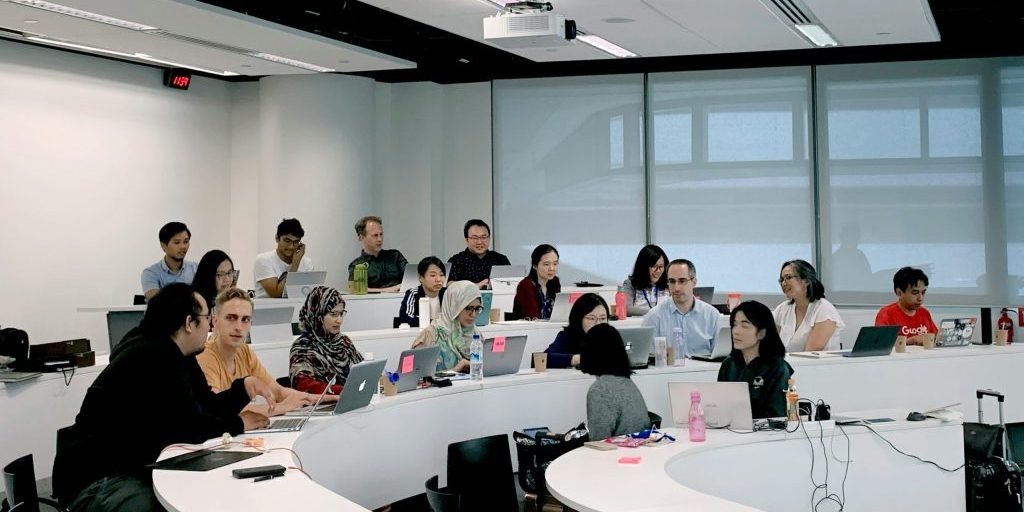
It has also already been tested where it counts: real classrooms, real cohorts. At the University of Exeter Business School, Macat has run PACIER-based teaching for three consecutive years with MBA students. “The benefits are clear,” says Prof. Donald Lancaster, Director of MBA Programmes: “sharper analytic thinking, stronger problem-solving and greater creative agility.” Andreas Schleicher, the OECD’s Director for Education and Skills, has been equally direct: “This is the learning of the future.”
Why India Market Entry
Macat has been candid about one thing from the outset: it has no existing presence in India. That’s deliberate. Rather than import a programme built for another market unchanged, Macat chose to enter through a partner equipped to shape the right fit for India from the first conversation pilots first, fixed playbooks later.
That partner is India Market Entry, founded in 2020 and headquartered in Faridabad, with a network spanning tens of thousands of schools, edu-preneurs, and large Indian corporates, and delivery experience across K-12, higher education, teacher training, publishing, and EdTech. As Macat’s official India partner, IME owns every pilot, conversation, and eventual agreement with an Indian institution or organisation.
What distinguishes this launch is how it’s being run segmented by buyer, not sprayed as one generic pitch:
- Schools (K-12): whole-school capability building assessment, teacher training, and reassessment mapped directly onto the competency-based shift NEP 2020 itself calls for, and designed to sit inside the Capacity Building Programme mechanism CBSE schools already work within.
- Higher education: a scored admissions signal for private universities and business schools, built on the same framework already proven at Exeter, with a second, system-level door open for university associations and policy bodies exploring the OECD programme directly.
- Corporate hiring and L&D: entering through mid-sized law firms first, where critical-thinking testing in graduate recruitment is already standard, the pitch is a better instrument, not a new category to explain.
- Assessment, EdTech, and publishing partners: a licensing model for organisations already running testing at scale the fastest route to volume in a new market is borrowing distribution that already exists, not building a parallel sales force from zero.
Every door opens with a free pilot, not a procurement process, the fastest way for an institution to see a real PACIER report before any commercial conversation begins.

The bigger signal
Set against the numbers above, this launch reads as more than one assessment finding its first Indian institutions. A $313 billion education market, a national policy explicitly inviting foreign providers in, and a global employer base naming analytical and creative thinking as the skills that matter most that combination is precisely the opportunity international education companies have been watching India for.
What IME and Macat are doing with it segment the buyers, lead with peer-reviewed evidence over marketing claims, open with a pilot instead of a pitch, and say plainly what isn’t proven yet isn’t a one-off. It’s the same approach IME brings to every international education brand it helps enter India.
Assessing the skills AI can’t replace starts, in India, with a conversation.
If you lead a school, university, or corporate L&D function and want to see what a PACIER report actually looks like or you’re an international education provider watching India from outside, working out what a considered entry looks like in practice that conversation starts with India Market Entry.
Join Our Newsletter
Subscribe to our newsletter for the latest trends, insights, and updates on global education and market opportunities with IME!

India Market Entry (IME) is a boutique consulting firm specialising in assisting global education stakeholders to navigate India’s vibrant education sector. IME’s core competency is strategic business development.
Quick links
Let's Get in Touch!
© 2024 India Market Entry. All rights reserved.
Trakru Global Services Private Limited that owns www.indiamarketentry.com, is a company incorporated under the laws of India, having its office at 588, Sector 14, Faridabad, Delhi NCR, Haryana, 121007, having CIN number U93000HR2020PTC087647