Why India Needs a Structured Student Absence Solution: Launching AV1 Robot
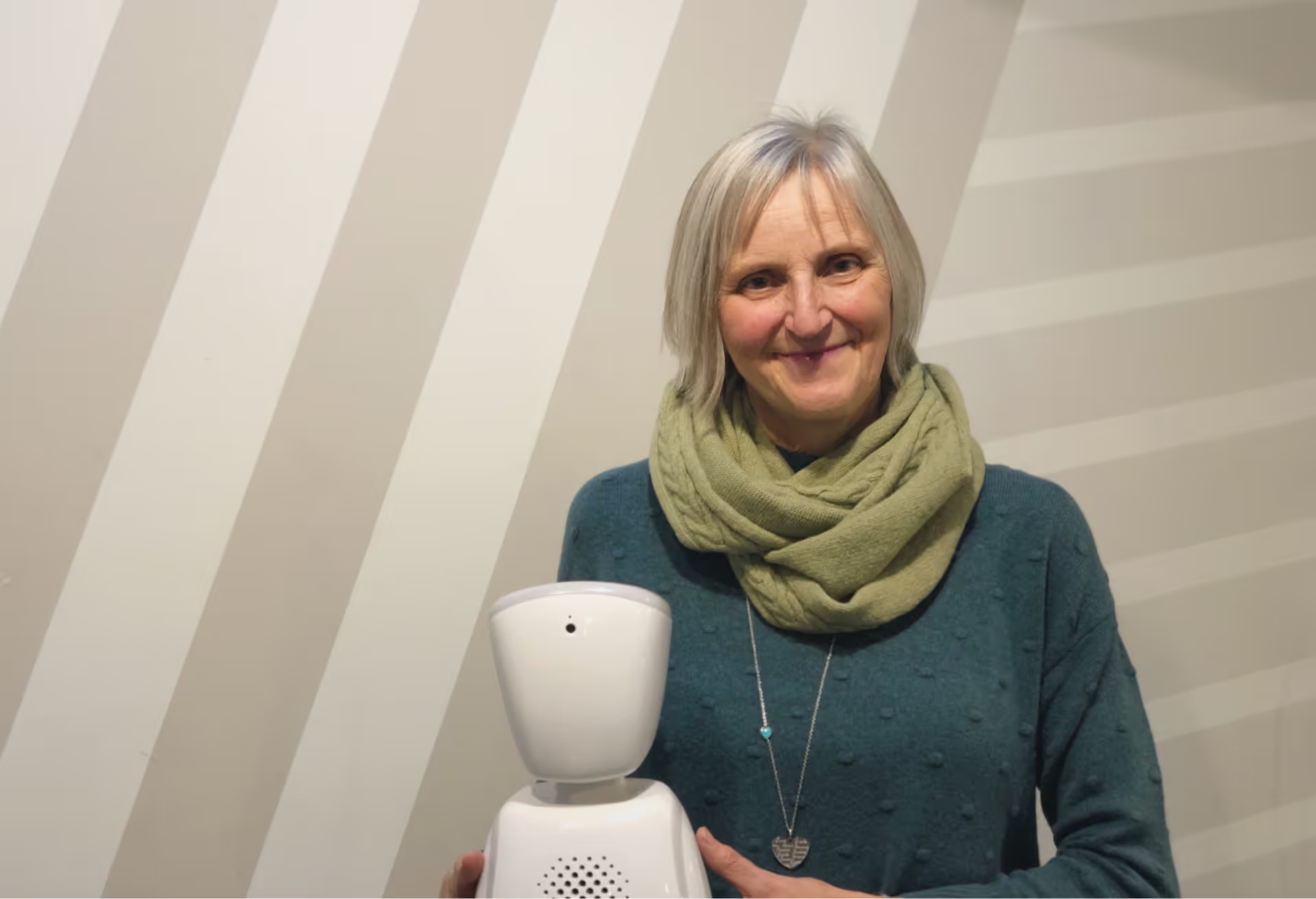
India is home to one of the largest education systems in the world.
According to UDISE+ data, India serves over 250 million school students across more than 1.4 million schools. Each year, nearly 3 million students appear for CBSE Class 10 and 12 board examinations alone, with millions more across state boards, CISCE, and international curricula.
India’s education ecosystem is vast, ambitious, and deeply performance-driven.
Yet within this scale lies an overlooked challenge:
What happens when a student cannot physically attend school for an extended period?
Today, India Market Entry announces its partnership with No Isolation to introduce AV1, the world’s leading classroom telepresence robot into Indian schools.
This is not simply a technology launch.
It is the introduction of a structured student absence solution in India.
The Hidden Gap in India’s Education System
Despite India’s scale and policy reforms, extended student absence remains largely unmanaged structurally.
Students miss school for many reasons:
- Chronic illnesses such as asthma, diabetes, cancer, autoimmune conditions
- Major surgeries and recovery periods
- Mental health challenges and anxiety-related absence
- Family relocation, including medical travel abroad
Immunocompromised conditions requiring isolation
The Mental Health Dimension
According to WHO and Indian public health studies, approximately one in seven adolescents globally experiences a mental health disorder, and anxiety disorders are among the most prevalent in Indian youth.
In Indian schools, emotionally based school non-attendance (EBSNA) is increasingly reported by counsellors, particularly in high-pressure academic environments.
Yet when anxiety prevents attendance, the system offers few structured reintegration tools.
The Academic Stakes
In India’s board-driven system:
- Class 10 and 12 are high-stakes academic years
- Continuous assessment and internal evaluations require sustained participation
- Competitive entrance exams demand consistent preparation
Even a few weeks of absence during critical academic cycles can have lasting effects.
The academic system is built for continuity.
But life is not.
The Limitations of Existing Solutions
When extended absence occurs, families typically rely on:
Home tutoring – which replaces teachers but removes students from their classroom community.
Online learning platforms – which provide content but eliminate real-time participation.
Occasional video calls – which disrupt classroom flow and rarely replicate natural engagement.
None of these preserve what matters most:
- Peer interaction
- Classroom rhythm
- Teacher familiarity
- Emotional belonging
India’s digital education progress has been significant. But structured absence management remains underdeveloped.
A Global Model Now Arriving in India
Founded in 2015, No Isolation created AV1 with a simple mission:
To ensure no child is excluded from education due to circumstances beyond their control.
AV1 is not remote schooling.
It is not a hybrid classroom tool.
It is a physical presence inside the classroom.
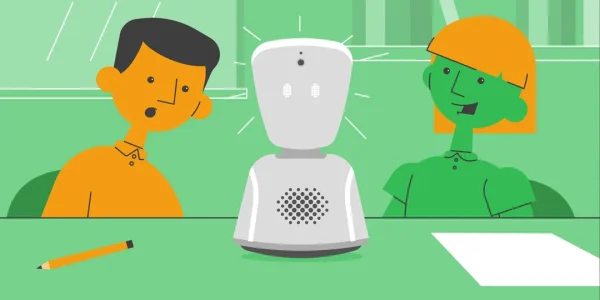
Placed on the student’s desk, AV1 allows them to:
- See and hear the classroom in real time
- Rotate a 360° camera
- Raise their hand
- Participate in discussions
- Remain socially present
Classmates carry AV1 between lessons. Teachers interact with it naturally.
The classroom continues as normal.
The absent student remains part of it.

Why India Is Ready Now
Several structural shifts make this the right moment.
1. NEP 2020 Emphasizes Inclusive Education
India’s National Education Policy (2020) highlights:
- Equitable access to learning
- Technology integration
- Student wellbeing
- Flexible educational pathways
AV1 operationalizes these principles at classroom level — ensuring students remain included even during physical absence.
2. Increasing Focus on Student Wellbeing
Indian schools are investing more in counselling, SEL programs, and wellbeing initiatives.
Yet when a student cannot physically attend due to anxiety or health conditions, traditional options are limited.
AV1 provides:
- Gradual reintegration pathways
- Dignity-preserving participation
- Reduced stigma
- Continued peer connection
It addresses not only academic continuity but emotional stability.
3. India’s Outbound Medical Travel Reality
India records significant outbound medical travel each year — particularly to Singapore, the UK, and the United States for specialized treatment.
During these periods, students often disengage from Indian curricula entirely.
AV1 allows students to:
- Remain enrolled
- Continue attending lessons
- Stay connected to classmates
Return without academic regression
4. India’s Peer-Centric Classroom Culture
Indian classrooms are socially vibrant environments.
Learning is collaborative:
- Group projects
- Peer explanations
- Shared notes
- Collective exam preparation
AV1 protects this ecosystem.
When classmates interact with AV1, they develop empathy, responsibility, and inclusion awareness.
The benefit extends beyond the absent student.
It strengthens school culture.
Proven Globally. Structured for Scale.
AV1 is already trusted across:
- 19 countries
- 5,000+ deployments
- 100,000+ lessons attended
- 70%+ reintegration success rates reported by schools
It is used by schools, municipalities, hospitals, and education authorities across Europe.
This is not an experiment.
It is a globally validated inclusion framework.
Designed for Safety and Simplicity
In India’s evolving child protection landscape, safeguarding is critical.
AV1 includes:
- One-way camera (student never visible)
- No recording capability
- End-to-end encrypted streaming
- GDPR-aligned data standards
- POCSO-aligned design principles
Operationally, it requires no complex infrastructure changes.
Teachers continue teaching normally.
There is no hybrid classroom disruption.
A Structural Shift in Indian Education
India has digitised content delivery.
It has modernised curriculum frameworks.
It has expanded access dramatically.
The next step is structured absence continuity.
AV1 introduces a new category into Indian education:
Student absence management with real-time classroom inclusion.
This aligns with:
- Policy reform
- Academic competitiveness
- Mental health awareness
- Parental expectations of holistic support
The Role of India Market Entry
India Market Entry is not merely introducing a product.
We are building:
- Institutional partnerships
- Training ecosystems
- Implementation frameworks
- Impact measurement systems
Our goal is to responsibly adapt a proven global model to India’s unique educational landscape.
Education Is More Than Attendance
In a country where millions compete academically each year, continuity matters.
But education is not only about grades.
It is about identity, belonging, and community.
When life interrupts schooling through illness, anxiety, or unforeseen circumstances; students should not disappear from their classrooms.
They should remain connected.
India is ready for this shift.
And AV1 is ready for India.
Join Our Newsletter
Subscribe to our newsletter for the latest trends, insights, and updates on global education and market opportunities with IME!

India Market Entry (IME) is a boutique consulting firm specialising in assisting global education stakeholders to navigate India’s vibrant education sector. IME’s core competency is strategic business development.
Quick links
Let's Get in Touch!
© 2024 India Market Entry. All rights reserved.
Trakru Global Services Private Limited that owns www.indiamarketentry.com, is a company incorporated under the laws of India, having its office at 588, Sector 14, Faridabad, Delhi NCR, Haryana, 121007, having CIN number U93000HR2020PTC087647