Critical thinking & creativity assessment, for higher education in India
- The framework
- The evidence
- In higher education
- Our India partner
Assessing the Skills AI can't Replace
The OECD and Macat are building a new global assessment for higher education — designed to become a new global benchmark for critical thinking and creativity.
Macat assesses critical thinking and creativity as six distinct, scored skills. Your entrance tests measure what students recalled, Not what they can do with it.
No procurement process to start. A single assessment sitting is enough to see what it shows you.
Provenance
Framework developed with
Exclusive partner since 2022
Reliability and validity published in

In postgraduate use for three years at
"The Macat vision is exceptionally exciting... this is the learning of the future." — Andreas Schleicher, Director for Education & Skills, OECD
What gets measured today
Most assessment used in Indian higher education — entrance tests, aptitude batteries, even most "21st-century skills" instruments — is built to check whether a concept was understood as it was taught. That's a necessary layer. It isn't the one employers and universities now say they're missing
Indian languages connected
Prefer to start in the language you already think in? Specific pairings are available directly from nine Indian-linked languages — see exactly which below.
The framework
Six skills. Twenty-four sub-skills. One student profile.
Every PACIER assessment reports a score for each of the six domains below, so an institution sees a profile, not a single number.
| Skill | What it captures | |
|---|---|---|
|
Problem Solving |
Framing a problem accurately and generating workable responses to it. |
|
|
Analysis |
Understanding how an argument is built — its parts, structure and hidden assumptions. |
|
|
Creative Thinking |
Generating genuinely new connections, explanations and hypotheses. |
|
|
Interpretation |
Establishing what a term, text or piece of evidence actually means. |
|
|
Evaluation |
Judging whether reasons given are acceptable, relevant and adequate. |
|
|
Reasoning |
Constructing an argument that is coherent, evidenced and able to withstand objection. |
|
Creative Thinking sits inside the critical thinking framework as one of the six skills, not as a separate product alongside it. No other benchmarked instrument used in Indian assessment currently scores creativity at all.
Built with, not built alone
Two collaborations that took years, not a product roadmap.
University of Cambridge — 2013 to 2015
Where PACIER came from
The six-skill model was developed in collaboration with the University of Cambridge, drawing on a survey of 122 academics across disciplines about what critical thinking actually requires in their field.. It was a research collaboration, not a certification — Macat built and owns the resulting framework and assessment.
OECD — exclusive partner since 2022
Where it's heading next
Macat is the OECD's exclusive partner for its forthcoming global assessment of critical thinking and creativity for higher-education readiness — what the OECD itself has described as "PISA for Higher Education." That programme is expected to launch in late 2027 or early 2028. Institutions and system-level bodies engaging with Macat now are positioned ahead of it.
The evidence
Published, not just claimed.
Journal of Intelligence · 2025 · Peer-reviewed
Shin, H.J. et al. — "The Nature and Measure of Critical Thinking: The PACIER Framework and Assessment"
An independent, peer-reviewed study examining the PACIER Critical Thinking Assessment's reliability and internal structure — the kind of scrutiny most assessment tools used in Indian education have not been through.
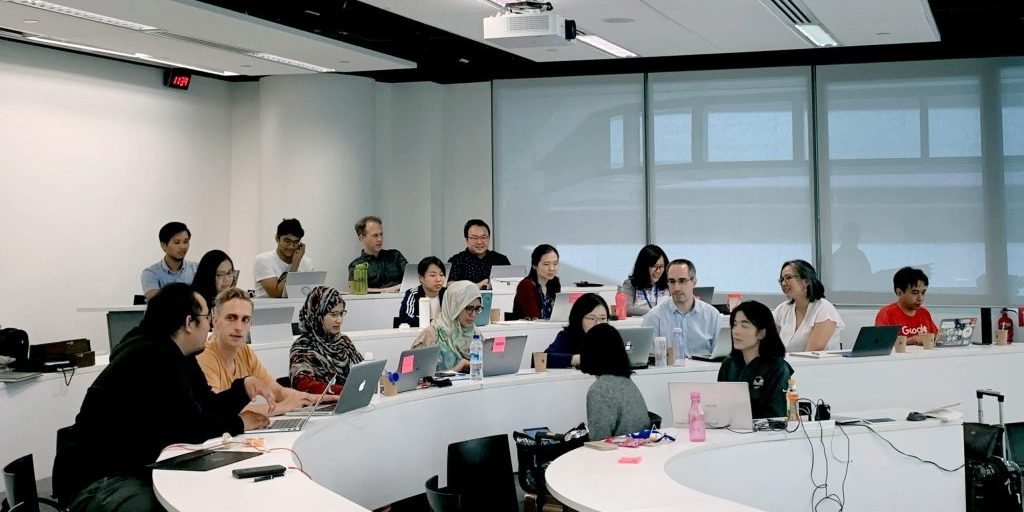
~700
students assessed
5×
sittings across one school year
0.953
marginal reliability
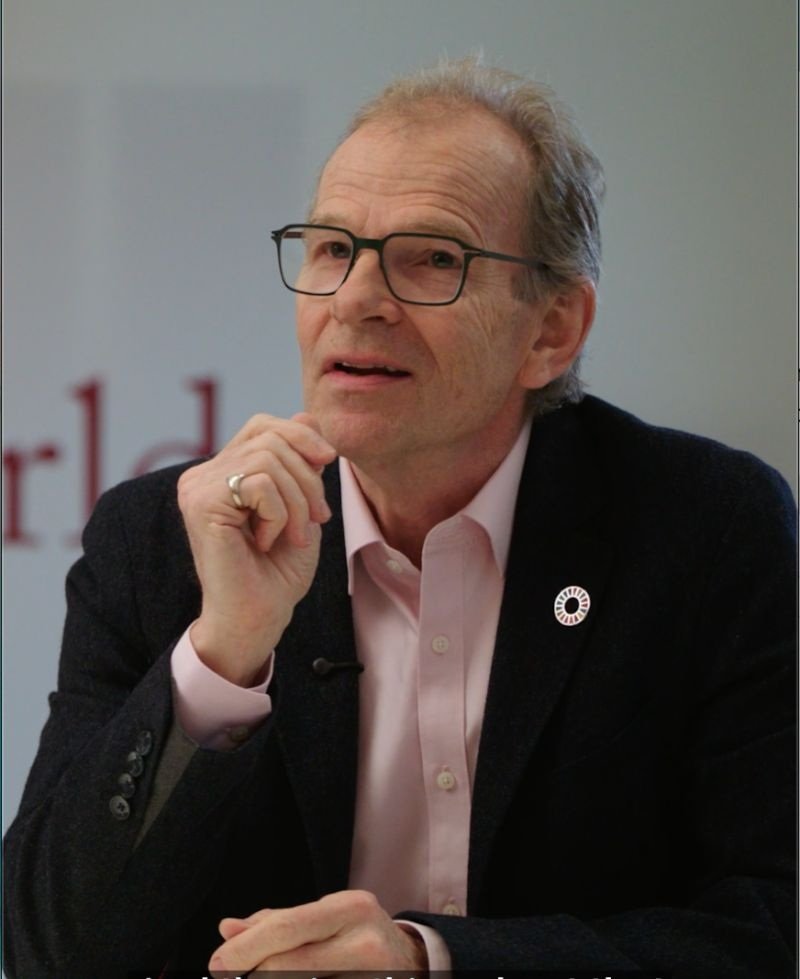
Prof. Donald Lancaster
Director of MBA Programmes, University of Exeter Business School
The benefits are clear: sharper analytic thinking, stronger problem-solving and greater creative agility.
In higher education already
Three years, one business school, real cohorts.
- — Delivered as 16 hours of workshops built on the PACIER model, alongside a baseline and endpoint assessment.
- — Run with successive MBA cohorts at the University of Exeter Business School for three years.
- — Today, this is Macat's most proven higher-education use case — the fastest starting point for an Indian business school or postgraduate programme.
- — Undergraduate admissions and broader graduate screening are active conversations we're extending into India, built from the same methodology, not a separate, unproven product.
Macat has no presence in India yet. That's deliberate.
We are not arriving with a programme built for another market and asking Indian institutions to adopt it as-is. India's investment in technology and AI-era skills makes this exactly the right place to ask what an Indian critical-thinking and creativity assessment should look like — and to test that answer with real institutions before scaling it.. That conversation starts with the institutions willing to run the first pilots, and the organisations willing to help shape how it reaches more than one institution at a time.

Official India partner for Macat. Every pilot, partnership conversation and eventual agreement with an Indian institution or organisation runs through India Market Entry.
What happens next
Two starting points — one conversation either way.
One
A short call
With India Market Entry, to understand your institution or organisation and what you'd want to get out of engaging with Macat.
Two
A pilot, or a partnership discussion
Institutions: a single assessment sitting, no procurement process, no cost to start. Partners: a conversation about distribution, consortia, or the OECD programme.
Three
A decision on your terms
Continue into a full programme or partnership, or don't. Either way, real evidence rather than a sales claim to decide from.
Start the conversation.
India Market Entry, Macat’s official India partner, will get in touch to arrange a short call.
- — Register interest if you lead admissions, teaching & learning, or a business school at one institution.
- — Partner with us if you represent a university association, consortium, accreditation body, or a system-level body exploring the OECD's forthcoming programme.
Critical thinking & creativity assessment, developed with the University of Cambridge and taken forward with the OECD. In India, delivered exclusively through India Market Entry.
Sources referenced on this page
- i. Shin, H.J., Li, S., Ryoo, J.H., von Davier, A., Lubart, T., & Khalil, S. (2025). The Nature and Measure of Critical Thinking: The PACIER Framework and Assessment.
- ii. Baker, S., & Bellaera, L. (2015). Preliminary summary from critical thinking survey. Unpublished report, University of Cambridge.
- iii. Testimonial, Prof. Donald Lancaster, Director of MBA Programmes, University of Exeter Business School.
- iv. Testimonial, Andreas Schleicher, Director for Education & Skills, OECD.
© Macat International. Landing page mockup — for internal review.
India partner: India Market Entry