She lost her sight at 12 and claimed to see the future for the rest of her life. Baba Vanga predicted a great war between East and West — one in which the East would ultimately prevail. She probably wasn't talking about university admissions. But in 2026, someone should check.
 New intl. students arriving at US colleges, Fall 2025 | 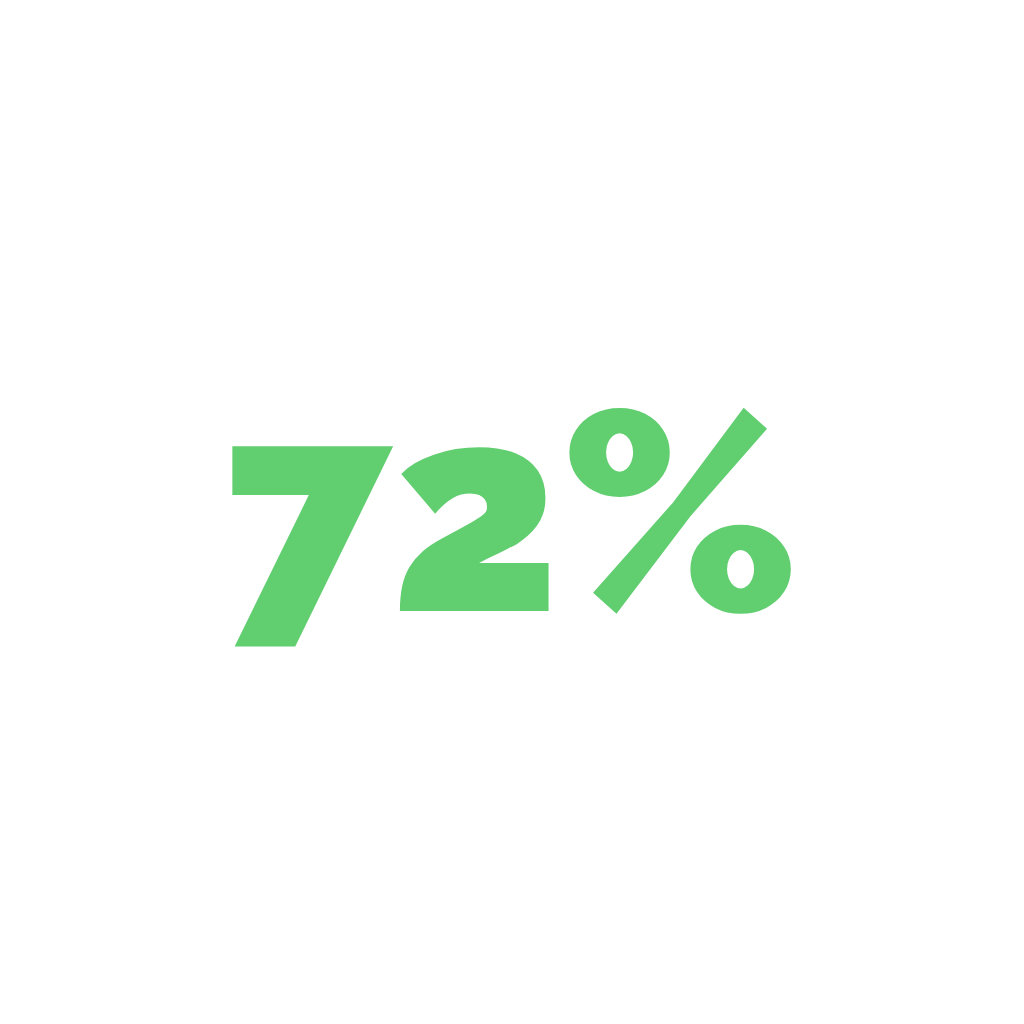 UK universities projected in deficit by 2025–26 |  India’s inbound student growth rate (QS, 2026) |  India’s overseas education spend by 2025 |
Let’s Start With a Blind Woman’s Warning
Before anyone takes this too seriously: Baba Vanga — the Bulgarian mystic born in 1911 who lost her sight in a childhood storm and became one of the most written-about soothsayers of the 20th century — is not a credible source of geopolitical analysis. Her predictions, passed down through second-hand accounts with no verified written transcripts, are described by historians as a mix of folklore, post-event reinterpretation, and cultural mythology.
That said, she is extraordinarily hard to ignore. Devotees claim she predicted the 9/11 attacks, the sinking of the Russian submarine Kursk, the Chernobyl disaster, and the election of a Black US president — all before they happened. Skeptics counter that every event, once it occurs, can be retrofitted to a sufficiently vague prophecy. Both sides have a point.
Here is what she reportedly said about the balance of global power:
"A war in the East will begin, and there will be destruction of the West. The East will rise as the dominant force, and the old powers will crumble." — Attributed to Baba Vanga (source: multiple popular accounts, unverified original transcript)
We are not here to argue whether she was right in the mystical sense. We are here to argue something more grounded, and considerably more verifiable: that in the specific domain of global education, the data of 2025 and 2026 is telling a story that would make even a sceptic pause.
The West’s grip on global education — which has been the dominant soft power instrument of the United States and United Kingdom for generations — is weakening. Fast. And India is positioned to be the primary beneficiary.
What Is Actually Happening in American Universities Right Now
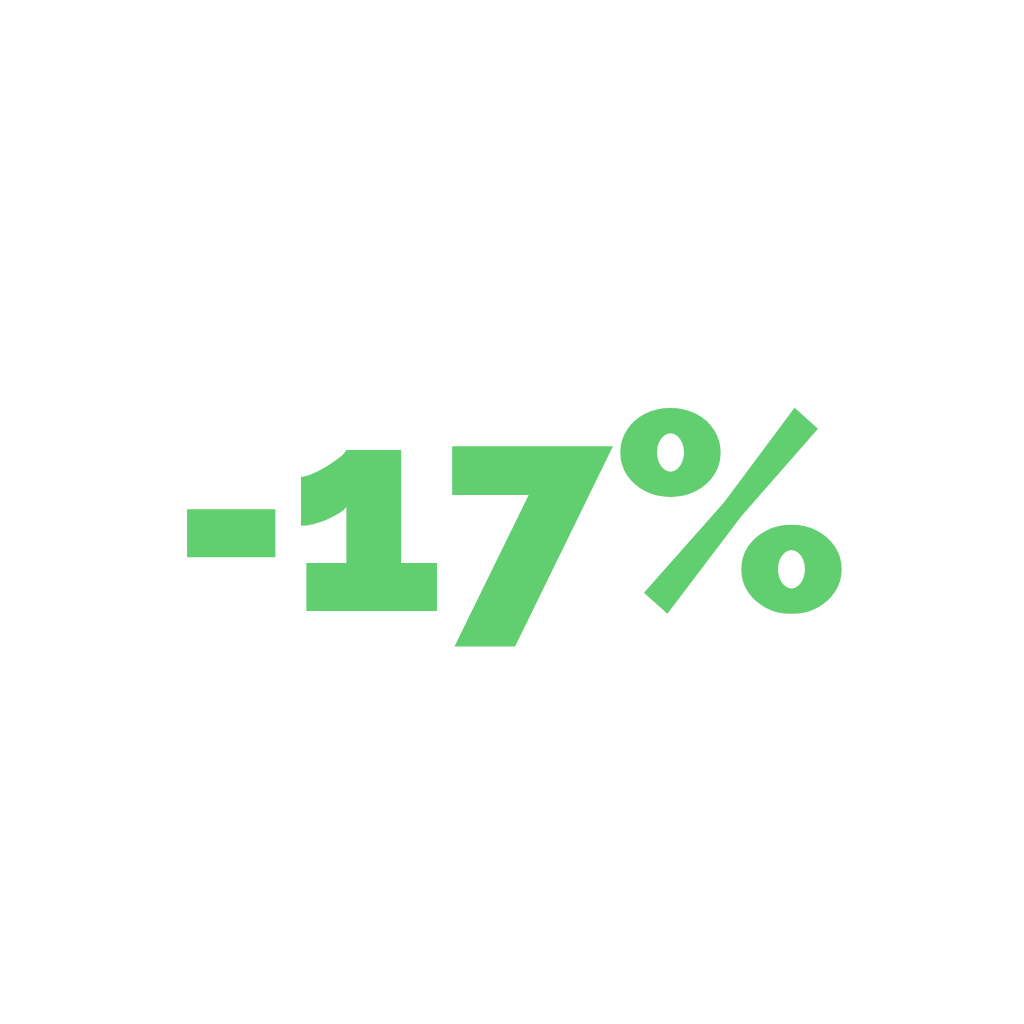
For the fall 2025 semester, new international student enrolments at US colleges fell by 17% — the sharpest single-year decline since the COVID-19 pandemic (Institute of International Education, November 2025). Not total enrolments: new arrivals. First-time students choosing the United States, down by nearly one in five.
The Trump administration’s visa policy is at the centre of the disruption. Since early 2025, it has: cancelled the student visas of approximately 8,000 international students — many with no legal violation on record; ordered all US embassies to halt scheduling new visa interviews for international students pending expanded social media vetting; proposed a ‘one-strike’ policy under which any visa holder deemed to have broken any law faces automatic revocation; threatened to ‘aggressively revoke’ visas for Chinese students, then partially reversed course after a trade deal; and issued travel restrictions affecting 39 countries.
Student arrivals in August 2025 were 19% below August 2024. Indian student arrivals fell 45%. African student arrivals fell 33%. At DePaul University in Chicago, international graduate enrolment dropped nearly 62% in a single year — forcing significant spending cuts. At Kent State University, the shortfall required an additional $4 million in budget cuts. At University at Buffalo, 750 fewer international students than expected created a 15% graduate enrolment decline.
NAFSA, the association for international educators, described the environment starkly. ‘We are confronting major headwinds with what I would say are poor policy decisions that the administration is taking,’ said NAFSA CEO Fanta Aw. ‘That is creating a climate for international students that signals that you’re not welcome here.
| This is not a temporary slowdown. Analysts at NAFSA project a 10–15% further decline in 2026 if current policies are maintained. The US higher education sector — which has relied on international student tuition to subsidise domestic research and teaching for decades — is facing a structural revenue crisis that will not reverse overnight. (Source: NAFSA, Higher Ed Dive, February 2026) |
And in Britain, a Self-Inflicted Wound
If the United States is damaging its position through aggressive policy, the United Kingdom is doing it through financial mismanagement and mixed messaging.
The Office for Students — the UK’s own higher education regulator — warned that 72% of English universities could be in deficit by 2025–26, with a total sector deficit of £1.6 billion. The domestic tuition fee, frozen since 2017, is now worth just £6,200 in real terms — the lowest per-student funding since the mid-1990s. More than 60% of academic staff are considering leaving the sector. University closures and mass redundancies are being tracked in real time.
Into this crisis, the UK government has announced a £925-per-international-student annual levy on English universities, starting in 2028–29. The projected net income loss to the sector is £270 million in year one, rising to £330 million by 2030–31. An estimated 16,500 fewer international students will enrol in England as a direct result. Universities UK has modelled the cumulative impact of all government policies on the sector at a £9 billion increase in costs through 2029–30.
As one report put it: international students have historically been the financial safety net of an underfunded UK higher education system. That safety net is being both reduced and taxed simultaneously.
| Several UK universities — including UCL, where international students generate 79% of fee income, and Imperial, where it is 77% — are directly exposed to a policy that taxes the very revenue keeping them viable. As HEPI, the UK’s leading higher education think tank, noted: this levy could push institutions that are already in deficit over the edge. (Sources: HEPI, August 2025; Universities UK, February 2026) |
The traditionally dominant Western powers are steadily losing ground to a rising Asia. This signals a major shift in the geopolitics of knowledge and innovation. — World Economic Forum / Times Higher Education World University Rankings 2026
The Shift Is Not Mythological — It Is Mathematical
The World Economic Forum, analysing the Times Higher Education World University Rankings 2026 — which cover 3,100 universities across 136 countries — published a finding that deserves to be read slowly:
‘The traditionally dominant Western powers, across North America and Western Europe, are steadily losing ground to a rising Asia, led by China. This signals a major shift in the geopolitics of knowledge and innovation.’ The report notes that Asia’s research and innovation centres are growing in both number and quality — while the UK university sector’s funding crisis and the US’s talent visa restrictions had not yet been fully captured in the 2026 rankings data. The real impact, the report implies, is still ahead.
South Korea has risen in all four research quality metrics and now has a record four universities in the top 100. Hong Kong has six institutions in the top 200. Indonesia is the most improved nation in the entire rankings. Saudi Arabia is leading an Arab world academic renaissance. Turkey now has 109 ranked universities — joint fourth globally by representation.
And India? India now has 54 universities in the QS World Rankings 2026 — the fourth most represented country in the world. India’s inbound international student numbers are growing at 8% per year and are projected by QS to reach 100,000 by 2030. India’s Education Minister at the 2026 Study in India Edu-Diplomatic Conclave described education as ‘the most enduring bridge between societies’ — and explicitly positioned India as a strategic alternative to a fractured Western education landscape.
India: The Reluctant Heir to Global Education Dominance
We say ‘reluctant’ because India does not have this transition handed to it. The challenges are real: only 42.6% of Indian graduates are considered fully employable (Mercer-Mettl, 2025). India hosts approximately 58,000 international students against an outflow of 1.33 million — an inbound-to-outbound ratio that reflects how far India still has to travel as a destination. Everyday challenges including cultural adaptation, uneven campus infrastructure, and limited global branding remain genuinely unsolved.
But the structural forces acting in India’s favour right now are unprecedented in their scale and simultaneity. Indian students are no longer willing to simply accept the uncertainty of US and UK visa regimes. Indian families spent $3.71 billion on international education in 2025 — a 31% rise from 2018 (Reserve Bank of India via Henley & Partners, 2026) — but the peak of 893,000 Indians studying abroad in 2023 had already contracted to 1.25 million in 2025 with the first decline in three years. That demand is not disappearing. It is redirecting.
Seventeen globally ranked universities have already received formal approval to establish campuses in India. Three are fully operational. UK universities — Southampton, Liverpool, Queen’s Belfast — are coming not to make a charitable contribution to Indian education, but because their home market is fracturing. Australia’s Deakin and Wollongong are already running. The first US university, Illinois Tech, opens in Mumbai in 2026. The 2023 UGC FHEI Regulations that enabled this — with full fee autonomy, profit repatriation rights, and degree equivalence recognition — represent the single most significant opening of any major education market since the European Union created free movement in education decades ago.
| India’s inbound student numbers are growing at 8% per year. QS’s Global Student Flows 2026 report identifies three scenarios under which India becomes a major study hub by 2030 — and in all three, the primary driver is the same: tightening in traditional Western destinations redirecting students toward more accessible alternatives. (Source: QS Global Student Flows, India report, 2026) |
So Was She Right?
Let’s be clear about what we are and are not claiming. Baba Vanga — the ‘Nostradamus of the Balkans’, whose 2025 predictions included Europe becoming ‘sparsely inhabited’ and a great war in which the East destroys the West — was almost certainly not foreseeing the specific mechanics of UK university levy legislation or F-1 visa revocations. Her prophecies, lacking verified original transcripts, remain firmly in the territory of folklore.
But here is the uncomfortable truth that her legend points toward: the idea that global power — including educational power — moves in long cycles, and that the centres of knowledge creation do not remain fixed, is not mysticism. It is history. The ancient world’s great knowledge centres were Alexandria, Baghdad, and Nalanda — not Oxford or Harvard. The dominance of Western universities is a relatively recent phenomenon, and it was always dependent on conditions: open borders, stable funding, political welcomeness, and a global perception that the West was where the best opportunities lived.
Three of those four conditions are now under active threat in both the US and UK simultaneously. And India — with 580 million people aged 5 to 24, the world’s fastest-growing EdTech market, 100% FDI through automatic route, and a government that has explicitly positioned education as its primary soft power instrument — is not passively waiting for an invitation.
The pivot of international universities to GIFT City, Mumbai, Delhi-NCR, and Bengaluru in 2026 represents not cyclical opportunism but fundamental realignment of global education markets. — GOALisB Research, December 2025
India Market Entry (IME) has been building relationships across India’s education ecosystem since 2020 — with 6,600+ K-12 schools, 2,000+ higher education institutions, 16,000+ preschools, and 1,800+ education resellers. We work with global education providers who want to be part of this shift, not caught off-guard by it.
| The question is not whether the shift is happening. The data has answered that. The question is whether your organisation is positioned on the right side of it. Speak to IME: contact@indiamarketentry.com | indiamarketentry.com |
Frequently Asked Questions
Q: Is the global education power really shifting from West to East?
The data from 2025–26 suggests a significant structural shift is underway. The Times Higher Education World University Rankings 2026, analysed by the World Economic Forum, concluded that ‘the traditionally dominant Western powers are steadily losing ground to a rising Asia.’ US new international student enrolments fell 17% in Fall 2025 (IIE). 72% of UK universities are projected in deficit by 2025–26 (Office for Students). South Korea, China, Hong Kong, and India are all rising in global rankings. Whether this becomes a permanent shift depends on whether Western policy course-corrects — but the current trajectory is clear.
Q: Why are US universities losing international students in 2025?
Trump administration policies including visa revocations (approximately 8,000 international student visas cancelled since early 2025), a halt on new visa interview scheduling, travel bans affecting 39 countries, and a proposed ‘one-strike’ automatic revocation policy have created what NAFSA CEO Fanta Aw called ‘a climate for international students that signals that you’re not welcome here.’ New international student arrivals in August 2025 were 19% below August 2024. Indian student arrivals fell 45%. Analysts project a further 10–15% decline in 2026 if policies are maintained (Higher Ed Dive, NAFSA).
Q: What is the UK’s international student levy and how will it affect universities?
The UK government has announced a £925-per-international-student annual levy on English universities, beginning in the 2028–29 academic year. Universities UK estimates it will contribute to a cumulative £9 billion increase in sector costs through 2029–30. The Office for Students warns that 72% of English universities could be in deficit by 2025–26 even before the levy takes effect. The levy is projected to reduce international enrolments in England by 16,500 per year by 2030–31. Universities like UCL and Imperial — where international student fees represent 75–79% of total fee income — are particularly exposed.
Q: How is India benefiting from the decline in Western education destinations?
India’s inbound international students are growing at 8% per year (QS, 2026). 17 globally ranked universities have received formal approval to establish Indian campuses under the 2023 UGC FHEI Regulations. QS’s Global Student Flows India report projects India becoming a major study hub by 2030, with tightening in Western destinations as the primary driver. India’s Education Minister used the 2026 Study in India Edu-Diplomatic Conclave to explicitly position India as a strategic alternative. India has 54 universities in the QS 2026 rankings — fourth globally by representation.
Q: What did Baba Vanga actually predict about East vs West?
Baba Vanga — the Bulgarian blind mystic who died in 1996 — is attributed with predicting a ‘great war’ in which ‘a war in the East will destroy the West.’ Historians and sceptics note that no fully verified written transcripts of her prophecies exist, and that many attributed predictions rely on post-event reinterpretation. The 2025 framing of her prophecies centred on an East vs West theme. This blog uses her legacy as a cultural lens to frame real, data-backed trends in global education — not as a factual claim that supernatural prediction is occurring. Always consult sceptical sources before taking any prophecy claim at face value.
References
1. Institute of International Education (IIE) — Fall 2025 Snapshot: New international student enrolments at US colleges down 17%; sharpest decline since COVID-19 — https://edsource.org/2025/trump-policies-impact-international-students/745207
2. Fortune — ‘Despite everything Trump has done, US colleges see just 1% decrease in foreign students this fall’ (17% new arrivals decline; DePaul -62%; Kent State $4M cuts) — November 2025 — https://fortune.com/2025/11/17/international-students-drop-trump-visa-restrictions-tuition-colleges/
3. NPR — ‘Colleges see a drop in international students under Trump’: August 2025 visa arrivals down 19% YoY; Indian student arrivals down 45% — August 2025 — https://www.npr.org/2025/08/27/nx-s1-5498669/trump-college-international-student-visa
4. Presidents’ Alliance on Higher Education — Latest developments tracking 8,000 visa revocations, SEVIS terminations, travel bans (39 countries), one-strike policy, May 2025 visa interview halt — https://www.presidentsalliance.org/directories-2-directories-international-students/
5. Higher Ed Dive — ‘International enrollment under pressure: How colleges can respond’ — NAFSA CEO quote; 10–15% further decline projected for 2026 — February 2026 — https://www.highereddive.com/news/international-enrollment-under-pressure-what-colleges-can-do/812258/
6. HEPI (Higher Education Policy Institute) — ‘The true cost of the Government’s proposed levy on international students’: £620M annual cost; UCL 79%, Imperial 77% of fee income from international students — August 2025 — https://www.hepi.ac.uk/2025/08/08/the-true-cost-of-the-governments-proposed-levy-on-international-students/
7. Universities UK — Financial impact of government policy on universities: £9B cumulative cost increase 2024–2030; 72% of providers in deficit by 2025–26 — February 2026 — https://www.universitiesuk.ac.uk/latest/insights-and-analysis/financial-impact-government-policy
8. The PIE News — ‘England’s universities face £330M loss under new £925-per-international-student levy’: 16,500 fewer students by 2030–31 — November 2025 — https://thepienews.com/englands-universities-face-330m-loss-under-new-925-per-international-student-levy/
9. World Economic Forum — ‘Global trends in higher education, research and innovation’ citing Times Higher Education World University Rankings 2026: ‘Western powers steadily losing ground to rising Asia’ — https://www.weforum.org/stories/2025/10/world-university-rankings-knowledge-creation-innovation/
10. QS — ‘India to Become Major Global Study Hub by 2030’: 8% annual inbound student growth; three scenarios all pointing to India as major destination — Global Student Flows 2026 report — https://www.newkerala.com/news/a/india-course-become-major-international-study-hub-as-231.htm
11. GOALisB Research — ‘Foreign University Campuses in India: India as Global Education Hub 2026–2030’: 17 UGC/IFSCA approved campuses; ‘fundamental realignment of global education markets’ — December 2025 — https://www.goalisb.com/post/foreign-university-campuses-in-india
12. Henley & Partners Education Report 2026 — Indian families spent $3.71B on international education in 2025 (+31% vs 2018); peak 893,000 Indians abroad in 2023 contracting to 1.25M in 2025 — https://www.henleyglobal.com/publications/henley-education-report-2026/changing-face-indian-student-mobility
13. Sky HISTORY / Euronews / WION News — Baba Vanga: ‘A war in the East will destroy the West’; 2025–2026 East vs West prophecy framing. Note: no verified original transcripts; widely reported as folklore — https://www.history.co.uk/articles/baba-vanga-predictions-2025
14. Ministry of Education, India — Study in India Edu-Diplomatic Conclave 2026: Minister Pradhan positions education as ‘most enduring bridge between societies’; UGC 2023 regulations highlighted — March 2026 — https://www.devdiscourse.com/article/law-order/3823252-india-positions-itself-as-global-education-hub-pradhan-at-study-in-india-edu-diplomatic-conclave-2026